
Interview River Cleanup: how drones strengthen the fight against plastic pollution
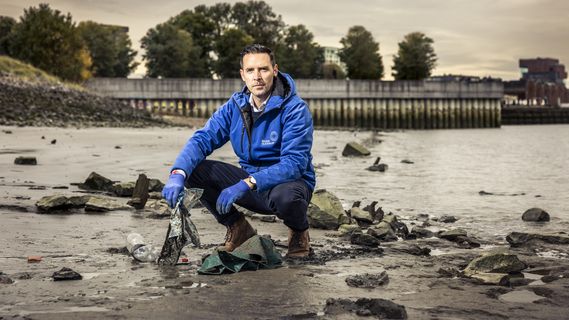
With that reality in mind, River Cleanup is building an ambitious international model to structurally prevent and remove plastic pollution: the Clean River Model. In 2025–2026, the model is being tested in Belgium, Indonesia and Cameroon, with the goal of scaling to 100 rivers by 2030. ABN AMRO MeesPierson Belgium is supporting a crucial component of this effort: the Drone Project, which uses drones and AI to map plastic pollution faster and more accurately.
We spoke with Thomas de Groote, founder of River Cleanup, and Hans Lenders, Head of Partnerships at River Cleanup, about the evolution of the organization, the role of technology and their ambitions for the future.
River Cleanup first became known for cleanup actions. Is this still your main focus today?
Thomas: “Our roots are indeed in cleanups and awareness raising. That remains important, because everything we remove is immediately saved from nature. But today, our main focus is on prevention. We work according to the Clean River Model, a cascade showing that the earlier you intervene, the greater the impact — and the lower the cost.”
“By reducing and avoiding plastic use, we prevent new waste from being created. If plastic does become waste, we enable early collection and better sorting — through school programs, local communities, waste containers, EcoBins, and policy advocacy — so it doesn’t become litter. What still ends up in the environment, we clean up on land as quickly as possible to prevent it from reaching rivers. And finally, we tackle pollution in the rivers themselves, using solutions such as trash barriers and other technologies to stop plastic before it reaches the ocean.”
“So, cleanups remain a visible and valuable part of our work, but today they form part of a much broader, more strategic model focused on maximum impact at the source.”
What explains this shift toward prevention?
What does the Clean River Model involve in practice?
What is the goal of the Drone Project? And how far along are you?
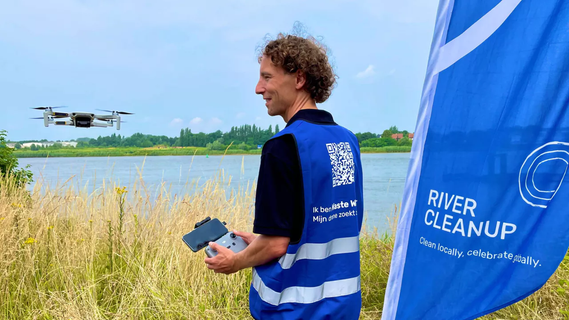
Hans: “With drones and AI, we can detect plastic pollution faster, more objectively and with much greater accuracy. Drones capture images of the riverbanks; AI models identify waste hotspots. These insights help us target cleanup actions, organize prevention initiatives and inform policymakers or companies.”
“In 2025 and 2026, we are mapping a total of 250 kilometers of riverbank along the Scheldt — 125 kilometers per year. We work together with VITO, Accenture, Ayvens and Aether Fund, and feed the insights into a future River Data Platform, the central hub for river-related data. We have already completed multiple flight days and monitored dozens of kilometers toward the overall target.”
How does the Drone Project contribute to River Cleanup’s broader mission and ambition?
To what extent is technology a driver for your mission? And does it lead to new project types or roles for River Cleanup?
Hans: “We look every day for the most effective solution — sometimes that’s low-tech or non-tech (cleanups are still often manual work), and sometimes technology is the accelerator. A few examples:
- Drones + AI to efficiently map plastic pollution
- AI tools to accelerate our operations: from developing solutions to data analysis and administration
- Trash barriers to stop floating waste in rivers
- Brand audits using scanners to identify types of plastic and brands collected, enabling upstream collaboration with companies
- Mobile data capture: with smartphones and dedicated software, our teams record precisely where, what and how much is collected, and what happens to that material during collection, sorting and transfer to recyclers — creating a reliable chain of custody”
“Technology alone won’t solve the problem, but combined with human effort and behavior change, it accelerates our mission and opens up new innovations (like the Drone Project) and roles (such as becoming a data and knowledge partner).”
Where do you see the biggest accelerator for a sustainable breakthrough today?
Thomas: “Policy is the biggest accelerator. Ambitious government policy creates the playing field and directs capital in the right direction. In the summer of 2025, we unfortunately saw in Geneva that governments were (still) unable to reach a Plastic Treaty. That’s why it’s important that we keep pushing.”
“A second major accelerator is data. Data on rivers and plastic pollution exists, but is often modeled instead of measured, limited, non-standardized or not easily accessible. That’s why — together with PwC — we are building a River Data Platform where relevant data is brought together.”
What does the collaboration with ABN AMRO MeesPierson Belgium look like in practice?
How do you see the Drone Project evolving in the coming years?
What can readers of this interview do themselves?
Thomas: “Choose reusable solutions, reduce plastic consumption, sort correctly and join local cleanups. Small steps truly make a big difference. I’m living proof: what started in 2017 as a ten‑minute cleanup with my children has grown into more than 4 million kilos of river waste removed and 340,000 people joining cleanup activities. Life-changing for me, and for our rivers.”
“And above all, continue to expect companies and governments to take responsibility. That’s where real, structural change begins.”