
Update Bonds: Fed on hold
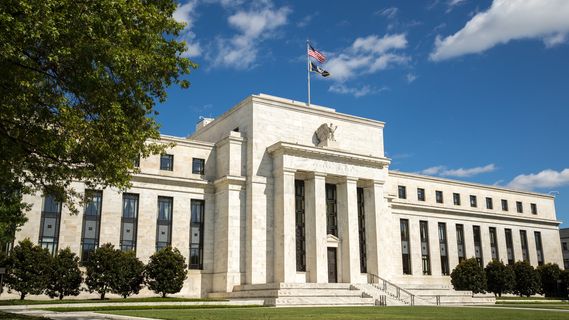
Financial markets entered the final days of January on a firmer footing, supported by a broadly predictable outcome from the latest Federal Reserve meeting and at least a short term stabilisation in geopolitical tensions.
As expected, the Fed kept its policy rate unchanged at 3.50–3.75%, pausing after three consecutive cuts. The decision, however, was not unanimous, with two Fed governors voting in favour of an additional 25 basis points (bps) reduction. The dissent highlights the ongoing policy divergence within the committee, particularly as political pressure intensifies ahead of the appointment of the next Fed Chair.
The Fed’s statement adopted a more constructive tone on economic activity, now described as "solid", reflecting resilient growth and signs of stabilisation in the labour market. Inflation was described as remaining "somewhat elevated". Fed Chair Jerome Powell reiterated the importance of central bank independence and declined to comment on his role beyond May, when his term as Chair expires, while stressing that monetary policy will remain data‑dependent. With risks to both inflation and employment now more balanced, the Fed appears comfortable extending its pause. This makes rate cuts before June increasingly unlikely, unless incoming data deteriorates meaningfully.
US rates were little changed after the meeting, with ten-year US Treasuries at 4.25% and two-year Treasuries at 3.57%, consistent with a market that anticipates a slower easing cycle. We still expect the US Treasury yield curve to steepen in the short to mid-term, driven primarily by long-end vulnerability. This is because the longer-end of the curve remains more sensitive to growth momentum and fiscal dynamics.
Separately, the broader ‘debasement trade’ in gold, commodities and foreign exchange has not yet affected Treasuries. It represents an additional risk, particularly if the weakness of the US dollar accelerates and prompts renewed sensitivity by the European Central Bank (ECB) to euro appreciation. In Europe, the ten-year Bund remains at 2.86%, reflecting stable inflation expectations and limited volatility.
Credit markets remain very tight across regions. US investment-grade spreads are trading at +72 bps, while European investment grade stands at +73 bps, both well below their historical averages and close to historical lows. High‑yield markets show a similar configuration, with US high yield standing at +258 bps and European high yield at +252 bps, also well below long‑term averages. Market conditions remain stable, supported by solid corporate fundamentals and steady investor demand across rating segments.
Next week, attention turns to the ECB, where neither ABN AMRO nor the market expects any policy change.
Florian Bardy