
Your company: external expertise, internal peace?
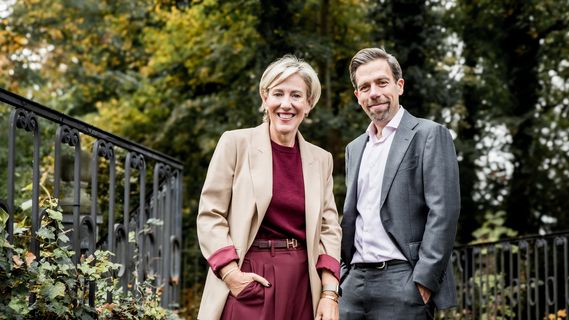
This article was originally published on the De Tijd website as part of a sponsored collaboration. You can find the original article at tijd.be.
It’s only logical: you assemble a board of directors with people you know and trust. In Belgium, this often means family members, since around 80% of companies with employees in our country are family businesses.
Yet that circle of trust also brings certain risks. Especially when the entire board consists solely of family members, external expertise and an objective viewpoint are often missing. Decisions may then be driven more by habit and family dynamics than by strategy, innovation, or critical reflection.
What an outsider does see
“Entrepreneurs mostly learn from each other. By hearing how others prepared their transfer, which resistance they faced, and what it ultimately delivered.”

Conny Vandendriessche
Co‑founder of Accent Jobs (now House of HR) and Stella P
“I have always worked with an external board of directors myself. Those people kept me sharp. They saw what I no longer saw, challenged me, and accelerated the company.”
“A board that consists solely of family also poses a risk when it comes to succession,” adds Tim Leysen, Head of Entrepreneurs & Enterprises at ABN AMRO MeesPierson.
“As long as everything goes well, an internal board may seem workable. But once the question arises of who will lead the company in the future, tensions can emerge. Who takes over? Who participates in decision-making? And who still dares to offer a counterweight if all voices at the table belong to family?”
Expertise and distance
“As long as everything goes well, an internal board may seem workable. But once the question arises of who will lead the company later, tensions can arise.”

Tim Leysen
Head of Entrepreneurs & Enterprises at ABN AMRO MeesPierson
“The next generation often gets too little space to chart its own course, which leads to conflict. In that context, the presence of external directors or advisors can make a major difference. They bring expertise and distance. They’re not tied to family history or old patterns.”
“A board that meets regularly also creates structure and a natural moment to discuss succession,” Vandendriessche adds. “It is a safe forum where the current and future generations systematically meet to talk about vision, ambition, and ownership.”
ABN AMRO MeesPierson sees it as its role to guide entrepreneurs through these sensitive topics and connect them with the right experts. The bank collaborates with an extensive network of partners — from specialized law firms to governance advisors such as Stella P. Stella P is a leading partner in governance, supporting entrepreneurs for more than ten years with one clear mission: strengthening organizations by making good governance tangible and workable.
Entrepreneurs learn from one another
“Several times a year we organize events together for entrepreneurs in different regions,” Vandendriessche continues. “Now that many baby boomers want to transfer their companies, we frequently bring entrepreneurs together so they can learn from each other. They hear how others expanded their board, what resistance they encountered, and what it ultimately brought them.”
Finally, both experts advocate a tailor-made succession process, with sufficient time and professional guidance. Stella P, for example, helps search for external directors and prepares next gens for their role as board members. “Only in that way are continuity, employees, and family relationships protected,” they conclude.